How to Limit Multitasking to Strengthen Your Focus serves as a guiding light in an age where distractions abound and the pressures of productivity loom large. As we delve into this essential topic, we uncover the profound impacts that multitasking has on our cognitive abilities and overall performance. This exploration seeks to clarify misconceptions about multitasking and illustrate the significant benefits of embracing a focused approach to our tasks.
In this discussion, we will explore the detrimental effects of multitasking on productivity, examining research findings that highlight the cognitive limitations it imposes. We will also provide insight into the advantages of concentrating on singular tasks, supported by examples of successful individuals and companies that have flourished by fostering an environment conducive to focus. Through practical strategies and techniques, we aim to equip you with the tools necessary to enhance your concentration and drive your productivity forward.
Understanding Multitasking
Multitasking is often perceived as an efficient way to handle multiple tasks simultaneously, but it can have significant implications on our ability to maintain focus. In an age where distractions are abundant, understanding the true nature of multitasking is crucial for enhancing productivity and cognitive performance. This segment will explore the concept of multitasking, dispel common myths, and highlight the cognitive limitations associated with it based on research findings.The term “multitasking” refers to the practice of engaging in more than one task simultaneously.
While it may seem like a productive strategy, research suggests that multitasking often leads to a decline in overall performance. When individuals attempt to divide their attention between several activities, they frequently experience increased cognitive load, which can impair their ability to concentrate effectively. The implication of this is that, contrary to popular belief, multitasking may reduce productivity rather than enhance it.
Common Myths About Multitasking
Despite the widespread belief that multitasking can improve efficiency, there are several prevalent myths that need to be addressed. Understanding these misconceptions is vital for fostering a more realistic view of productivity.
- Myth 1: Multitasking Saves Time. Many assume that doing multiple tasks at once will save time. In reality, switching between tasks can lead to significant time loss due to the cognitive effort required to reorient oneself with each transition.
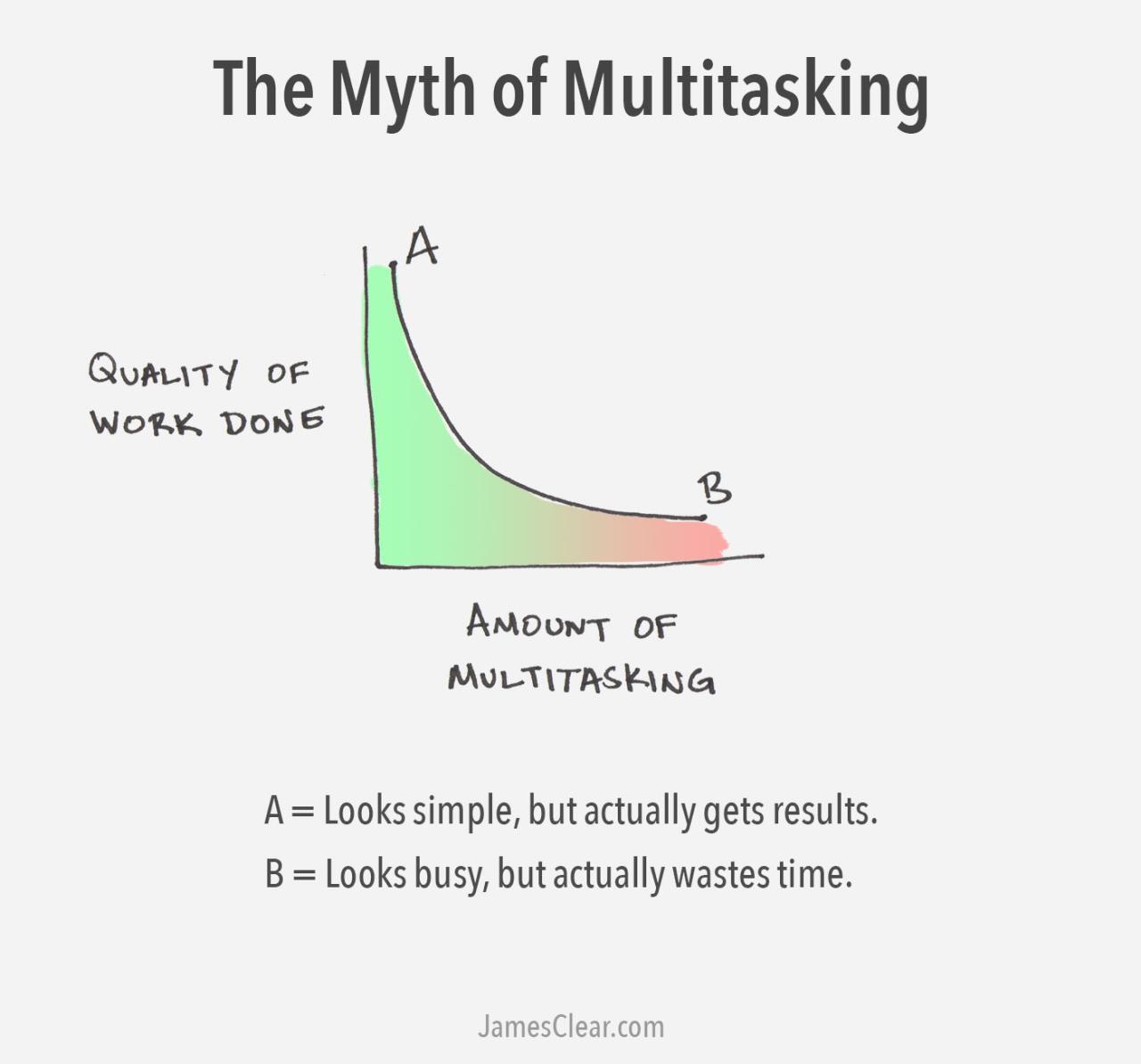
- Myth 2: Multitasking Improves Productivity. Studies show that engaging in multiple tasks can lead to a decrease in overall productivity, as the quality of work often suffers when attention is divided.
- Myth 3: Some People Are Better at Multitasking. While some individuals may feel they are adept at managing multiple tasks, research indicates that human cognitive resources are inherently limited, affecting everyone similarly.
Cognitive Limitations of Multitasking
Research has established that multitasking imposes significant cognitive limitations. The brain’s executive functions, which manage decision-making and problem-solving, are severely taxed when individuals attempt to juggle multiple tasks. The following points summarize key findings regarding cognitive limitations linked to multitasking:
- Decreased Attention Span: Engaging in multitasking can lead to a reduction in the ability to maintain sustained attention, resulting in frequent distractions and loss of focus.
- Increased Cognitive Load: The mental effort required to switch back and forth between tasks can overwhelm cognitive processing capabilities, leading to fatigue and decreased performance.
- Impaired Memory Formation: Multitasking can disrupt the encoding of information into memory, making it more challenging to retain knowledge and recall important details later.
“Research consistently shows that multitasking can significantly impair cognitive performance, as it diverts attention away from tasks at hand.”
By understanding the nature of multitasking and its implications on focus, individuals can make informed choices about how they manage their time and cognitive resources, ultimately leading to better productivity and improved mental clarity.
The Impact of Multitasking on Productivity

Multitasking, often perceived as a skill, can significantly undermine productivity. While individuals may feel they are accomplishing more by juggling multiple tasks, research indicates that the opposite is true. This section delves into the counterproductive nature of multitasking, illustrating its detrimental effects on performance and efficiency.
Negative Effects of Multitasking on Performance
Engaging in multitasking can lead to a decline in both the quality of work and the efficiency of task completion. When individuals switch between tasks, their brain requires time to recalibrate, which often results in a loss of focus and attention. The following points illustrate the adverse effects of multitasking:
- Reduced cognitive performance: The American Psychological Association highlights that multitasking can lead to a decrease in productivity by as much as 40%. This occurs because the brain must constantly shift focus, which hampers cognitive processes.
- Increased error rates: A study published in the journal “Cognitive Psychology” noted that workers who multitask are more likely to make mistakes, resulting in the need for additional time spent on corrections.
- Lower retention of information: Research suggests that individuals who multitask are less likely to retain information compared to those who focus on one task at a time. This can adversely affect learning and overall comprehension.
Comparison of Focused Work Versus Multitasking
When evaluating the output quality of focused work in contrast to multitasking, it becomes evident that dedicated concentration yields better results. Focused work allows individuals to engage deeply with tasks, enhancing creativity and problem-solving abilities. The following provides a comparative overview:
- Quality of output: Studies indicate that individuals working on a single task produce higher-quality work, as they can fully immerse themselves without distractions. A report from the University of California found that multitasking leads to a significant decline in the quality of work produced.
- Time efficiency: Focusing on one task typically results in completing it faster when compared to the time spent switching between multiple tasks. The time lost in transitions contributes to delays in overall project timelines.
- Stronger problem-solving capabilities: Research conducted by the Stanford University found that those who concentrated on single tasks performed better in problem-solving scenarios than their multitasking counterparts.
Statistics on Productivity Loss Due to Multitasking
Statistical evidence underscores the productivity losses associated with multitasking. Several studies have quantified these effects, making a compelling case for the benefits of focused work. Notable findings include:
- According to a report by the National Institute for Occupational Safety and Health, multitasking can reduce productivity by 40%.
- A study from the University of London revealed that multitasking can lead to a drop in IQ comparable to losing a night of sleep, indicating a significant decline in mental performance.
- Research from the “Journal of Experimental Psychology” indicates that it takes an average of 23 minutes and 15 seconds to regain focus after an interruption, showcasing the time wasted in switching tasks.
“Multitasking can reduce productivity by as much as 40%.”
National Institute for Occupational Safety and Health
In summary, the impact of multitasking on productivity is overwhelmingly negative. The juxtaposition of focused work against multitasking highlights the importance of concentrating on a singular task to enhance both performance and efficiency. Statistical insights further illuminate the detrimental effects, providing a clear rationale for limiting multitasking in our daily endeavors.
Benefits of Limiting Multitasking
Limiting multitasking is essential for improving overall productivity and focus. When individuals concentrate on a single task, they are more likely to achieve better results and experience enhanced cognitive function. This approach not only fosters deeper engagement with tasks but also facilitates a more profound understanding of the subject matter.Focusing on one task at a time allows for greater mental clarity and reduces the cognitive load that comes with juggling multiple tasks.
When multitasking, the brain is forced to switch between activities, which can lead to diminished performance and increased errors. By prioritizing singular focus, individuals can harness their cognitive resources more effectively.
Enhanced Creativity and Problem-Solving
When multitasking is minimized, individuals often find that their creativity flourishes. Engaging deeply with one task allows for the exploration of ideas without distraction, leading to innovative solutions and insights. The following points illustrate how limiting multitasking contributes to enhanced creativity and problem-solving:
- Increased mental space for creative thinking: When individuals are not divided between multiple tasks, they can allow their minds to wander, facilitating the generation of new ideas.
- Greater depth of focus: Concentrating on one task enables individuals to explore complexities and nuances, which can lead to more effective problem-solving.
- Improved ability to connect disparate ideas: With focused attention, individuals can more readily synthesize information from various sources, leading to unique solutions.
Companies that emphasize focus over multitasking have seen notable successes. For example, Google encourages its employees to dedicate uninterrupted time to specific projects, fostering an environment that values deep work. Similarly, Apple has a culture of focus where employees are encouraged to concentrate on a limited number of projects at a time, leading to innovative products like the iPhone and MacBook.
“Deep work is the ability to focus without distraction on a cognitively demanding task.” – Cal Newport
Overall, the benefits of limiting multitasking extend beyond personal productivity; they contribute to a more innovative and efficient work environment. Embracing a focused approach can lead to significant advancements, both in individual capabilities and organizational achievements.
Strategies to Limit Multitasking
In a world filled with constant distractions, limiting multitasking is essential to enhance focus and productivity. By implementing effective strategies, individuals can streamline their tasks and foster a more concentrated work environment. Below are key methods that can aid in achieving this goal.
Methods for Organizing Tasks
Organizing tasks effectively is critical for minimizing distractions. When tasks are structured clearly, it becomes easier to focus on completing one at a time. Here are several methods to consider:
- Prioritization: Use a priority matrix to categorize tasks based on urgency and importance. This helps in identifying which tasks require immediate attention and which can be scheduled for later.
- To-Do Lists: Maintain a daily or weekly to-do list to keep track of tasks. Ensure that the list is manageable and that tasks are broken down into smaller, actionable steps.
- Digital Tools: Utilize task management applications like Trello or Asana to organize tasks visually. These tools facilitate better tracking of progress and deadlines.
- Time Blocking: Allocate specific time slots for individual tasks. This method reduces the tendency to switch between tasks and allows for deeper concentration on each item.
Importance of Setting Specific Goals for Focused Work Periods
Setting specific goals for focused work periods enhances motivation and clarity. Clear objectives guide concentration and help maintain momentum throughout the workday. When objectives are well-defined, it is easier to minimize distractions and stay on track. For instance, establishing a goal to complete a report by noon encourages an individual to immerse themselves in that task without diverging to unrelated activities.
By setting realistic and measurable targets, one can create a sense of accountability and accomplishment.
Designing a Daily Schedule with Blocks of Undisturbed Time
Creating a structured daily schedule that encompasses blocks of uninterrupted time can significantly enhance focus. Undisturbed time is critical for engaging deeply with tasks and fostering productivity.To design an effective schedule, consider the following elements:
- Morning Focus Blocks: Start the day with a dedicated block of time for high-priority tasks. This can be the most productive period, as energy levels are typically higher in the morning.
- Scheduled Breaks: Integrate short breaks between work sessions to recharge. Techniques like the Pomodoro Technique, which involves working for 25 minutes and then taking a 5-minute break, can improve focus.
- End-of-Day Reviews: Set aside time at the end of each day to review completed tasks and plan for the next day. This practice helps in maintaining organization and setting clear priorities for the following day.
“Focusing on one task at a time can significantly enhance productivity, leading to better quality work and increased efficiency.”
Techniques for Strengthening Focus
Enhancing focus is crucial for improving productivity and achieving desired outcomes in various tasks. By incorporating specific techniques, individuals can significantly strengthen their concentration and minimize distractions. This section discusses mindfulness practices, the importance of breaks, and effective tools that support sustained focus.
Mindfulness Practices for Concentration
Mindfulness practices are designed to enhance awareness and concentration by promoting present-moment engagement. These techniques can significantly improve one’s ability to focus on tasks while reducing stress and anxiety. Common mindfulness practices include:
- Meditation: Regular meditation sessions, even for just a few minutes each day, can train the mind to concentrate better. Focused attention meditation, where one concentrates on their breath or a specific thought, is particularly effective.
- Deep Breathing Exercises: Engaging in deep breathing exercises can help calm the mind and enhance concentration. Taking slow, deep breaths can reduce stress and redirect attention to the task at hand.
- Body Scan: This practice involves mentally scanning the body for tension and consciously relaxing each part. This technique increases bodily awareness and promotes a sense of calm, facilitating better focus.
The Role of Breaks in Maintaining Focus
Incorporating regular breaks into work routines is essential for maintaining long-term focus. Breaks allow the brain to rest and recharge, which enhances overall productivity. Engaging in brief, intentional pauses is beneficial for several reasons:
- Restoration of Mental Energy: Short breaks help restore mental energy, allowing individuals to return to their tasks with renewed focus and clarity.
- Improved Cognitive Function: Research shows that taking breaks can improve cognitive function, including memory and creativity, which are vital for problem-solving and effective work.
- Enhanced Motivation: Breaks can boost motivation by providing a psychological reward, making it easier to sustain attention on tasks over longer periods.
Tools and Apps for Managing Distractions
A variety of tools and applications are available to assist individuals in managing distractions and fostering focus. These tools can help minimize interruptions and create an optimal working environment. Some effective options include:
- Focus@Will: This application offers specially designed music tracks intended to enhance concentration and productivity. The science behind the soundtracks helps users maintain a sustained focus during tasks.
- Trello: This project management tool assists users in organizing tasks visually, thereby minimizing the cognitive load associated with keeping track of multiple responsibilities.
- Forest: The Forest app encourages users to stay focused by growing a virtual tree for a set period. If the user leaves the app to check their phone, the tree dies, promoting commitment to staying on task.
Overcoming Challenges in Limiting Multitasking

In the pursuit of enhancing focus and productivity, individuals often encounter various challenges when attempting to limit multitasking. These barriers can hinder progress and create a cycle of distractions that are difficult to escape. Understanding these obstacles is crucial in developing effective strategies to overcome them and create an environment conducive to focused work.Common barriers to reducing multitasking include ingrained habits, external pressures, and a lack of supportive environments.
Many individuals have become accustomed to splitting their attention across multiple tasks, which can create a false sense of productivity. Additionally, workplace cultures that prioritize speed and responsiveness can exacerbate the tendency to multitask. To combat these issues, it is essential to first recognize the sources of distraction and implement strategies that promote concentration and mindfulness.
Identifying and Overcoming Internal Barriers
One significant barrier to limiting multitasking is the habit of switching tasks frequently. This behavior often arises from a desire to address multiple demands simultaneously, leading to diminished quality of work. To address this, individuals can adopt the following strategies:
- Set Clear Priorities: Establishing a clear hierarchy of tasks helps in focusing on what truly matters, allowing individuals to concentrate on one task at a time.
- Practice Mindfulness: Engaging in mindfulness exercises can enhance awareness of one’s focus and help resist the urge to multitask.
- Limit Task Switching: Designate specific time blocks for particular tasks, minimizing the temptation to shift attention frequently.
Addressing External Pressures
External pressures, such as workplace demands or family responsibilities, can significantly impact one’s ability to limit multitasking. It is essential to acknowledge these factors and develop strategies to manage them effectively. The following approaches can be beneficial:
- Communicate Boundaries: Clearly communicating availability and boundaries with colleagues or family members can help mitigate interruptions and foster a focused environment.
- Utilize Technology Wisely: Leverage tools and applications designed to limit distractions, such as website blockers or focus timers, to create a more controlled work atmosphere.
- Encourage Supportive Culture: Advocate for a workplace culture that values deep work by promoting policies that discourage constant connectivity and encourage focused work periods.
Building a Supportive Environment
Creating a conducive environment that fosters focus is vital in overcoming multitasking challenges. A well-structured workspace and supportive practices can enhance concentration. Consider the following techniques:
- Organize Your Workspace: A clutter-free environment reduces distractions and enhances mental clarity, making it easier to focus on single tasks.
- Establish a Routine: Consistent daily routines cultivate habits that support focus and minimize the likelihood of multitasking.
- Incorporate Breaks: Regular breaks are essential for maintaining mental energy and focus. Techniques such as the Pomodoro Technique encourage productive intervals followed by short breaks.
By recognizing internal and external challenges and implementing supportive strategies, individuals can effectively limit multitasking and significantly enhance their focus and productivity.
Closing Notes
In conclusion, mastering the art of limiting multitasking is not merely a productivity hack; it is a pathway to unlocking deeper creativity and enhanced problem-solving abilities. By embracing focused work and implementing strategies to minimize distractions, individuals can achieve a remarkable transformation in their work quality and efficiency. As we move forward, may we all aspire to foster environments that prioritize focus, allowing our potential to shine.