Memorizing a speech can significantly transform how one delivers a message, fostering a sense of confidence that resonates with the audience. In this comprehensive guide, we will explore the various dimensions of speech memorization, highlighting its importance in enhancing speaker confidence and audience engagement. Understanding the common fears associated with forgetting lines, along with effective techniques and strategies, will empower you to connect with your audience authentically and meaningfully.
From chunking information for easier recall to utilizing visualization techniques, we will delve into methods that not only aid in memory retention but also ensure that your delivery remains compelling. Equipped with the right tools and techniques, anyone can master the art of memorization and deliver their speech with poise and assurance.
Importance of Memorization in Speech Delivery

Memorization plays a pivotal role in the effectiveness of speech delivery. When speakers take the time to memorize their content, they not only enhance their own confidence but also facilitate a stronger connection with their audience. The ability to deliver a speech without relying heavily on notes allows the speaker to engage more fully, fostering an environment of communication that is both dynamic and impactful.A well-memorized speech significantly enhances audience engagement.
When a speaker delivers their lines fluidly and confidently, it captures the audience’s attention and encourages active listening. Conversely, hesitations or reliance on notes can create a barrier between the speaker and the audience, reducing the impact of the message. Engaging the audience effectively can be achieved through eye contact, gestures, and vocal variety, all of which are easier to execute when the speaker is not preoccupied with recalling their lines.
Role of Memorization in Enhancing Speaker Confidence
Memorization is intrinsically linked to a speaker’s confidence levels. A detailed understanding and recall of the speech content enable the speaker to focus on delivery rather than on the words themselves. This mental preparedness allows for:
- Reduced Anxiety: By memorizing the speech, speakers can alleviate the fear of forgetting lines, which often contributes to performance anxiety.
- Increased Control: A strong grasp of the material allows speakers to navigate unexpected interruptions or questions with ease, maintaining the flow of their presentation.
- Greater Authenticity: When speakers are confident in their memorization, they can infuse their personality into the speech, making it more relatable to the audience.
Impact of a Well-Memorized Speech on Audience Engagement
The delivery of a speech is just as vital as its content. A well-memorized speech can greatly enhance audience engagement through various means, including:
- Improved Eye Contact: A speaker who is not constantly referring to notes can maintain eye contact, creating a more personal connection with the audience.
- Dynamic Delivery: Memorization allows for a more expressive delivery, where speakers can utilize changes in tone and pacing effectively to emphasize key points.
- Encouragement of Interaction: A confident delivery invites audience participation, fostering an interactive atmosphere rather than a one-sided presentation.
Common Fears Associated with Forgetting Lines During a Speech
For many speakers, the fear of forgetting lines is a significant concern that can hinder performance. This fear often manifests in several ways:
- Memory Block: The concern that a sudden lapse in memory could lead to embarrassing pauses or missed points can be paralyzing.
- Self-Doubt: Speakers may doubt their ability to deliver effectively, which can result in a lack of confidence throughout the presentation.
- Negative Audience Perception: The fear of being judged by the audience for forgetting lines can create additional anxiety, detracting from the overall message.
Techniques for Effective Memorization
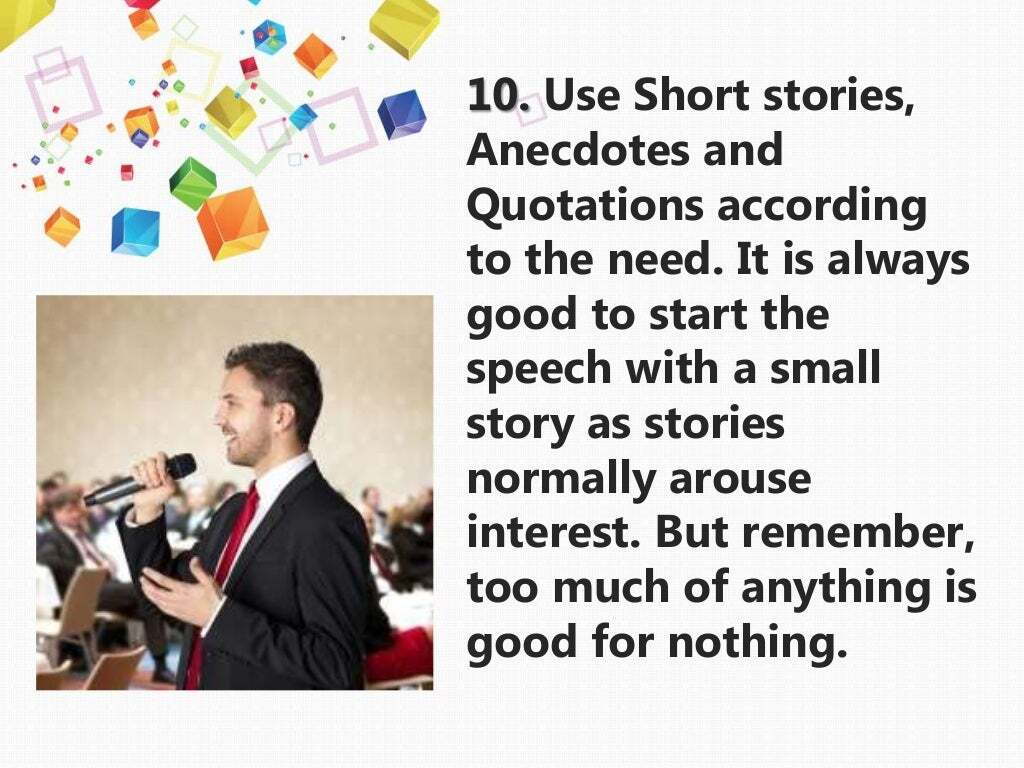
Memorizing a speech effectively is essential for a confident delivery. Employing various techniques can significantly enhance the ability to recall information during a presentation. The following techniques are widely recognized for their effectiveness in aiding memory retention and ensuring a smooth delivery.
Chunking Information for Easier Recall
Chunking is a method that involves breaking down large amounts of information into smaller, manageable units, or “chunks.” This technique leverages the brain’s tendency to remember grouped information more easily than isolated facts. For example, a long string of numbers can be remembered more effectively when divided into groups (e.g., 123456789 can be chunked into 123-456-789).
- Organize your speech into thematic sections, focusing on one idea at a time.
- Use bullet points or numbered lists to separate main ideas and supporting details.
- Identify s or phrases that encapsulate larger concepts, allowing for quicker recall.
By structuring information in this way, speakers can enhance their cognitive load capacity, allowing them to focus on delivering content with confidence.
Visualization Techniques to Aid Memory Retention
Visualization is a powerful tool for memory enhancement that involves creating mental images to represent information. This technique engages both the logical and creative parts of the brain, facilitating a deeper understanding and retention of the material. Effective visualization can significantly improve recall during a speech.
- Create vivid mental images associated with each key point of your speech. For instance, if discussing “growth,” visualize a tree flourishing with leaves.
- Use mind maps to visually organize the structure of your speech, connecting main ideas with branches and subpoints.
- Incorporate colors and symbols that resonate with the content, enhancing the memorization process through associative learning.
Engaging with visualization not only aids memory retention but also allows for a more dynamic presentation style, as speakers can convey their ideas with enhanced clarity and creativity.
Benefits of Rehearsal and Practice in Memorizing Speeches
Rehearsal and practice are indispensable components of effective speech memorization. Through repeated exposure and active participation, speakers can solidify their understanding of the material and improve their confidence in delivery.
- Regular practice helps to reinforce memory pathways, making recall more automatic during the actual presentation.
- Practicing in front of an audience, whether friends or family, provides valuable feedback and simulates real-world delivery conditions.
- Recording oneself can be beneficial for reviewing body language, pacing, and vocal clarity, allowing for adjustments to be made before the final presentation.
The benefits of rehearsal extend beyond mere memorization; they help speakers to connect emotionally with their content, resulting in a more engaging and impactful delivery. Through consistent practice, speakers can achieve a level of comfort and mastery that translates into confidence on stage.
Preparing Your Speech for Memorization

When preparing to memorize a speech, it is essential to focus on organizing the content in a way that enhances recall and delivery. A structured approach allows you to internalize your message more effectively, ensuring that your presentation flows seamlessly. By understanding the underlying principles of your speech, you can achieve a confident and engaging performance.Organizing your speech structure into clear sections is a critical step in the memorization process.
This not only aids in recall but also helps convey your message clearly to the audience. Breaking down your speech into distinct parts allows you to focus on one segment at a time, leading to a more manageable memorization task. The key sections might include the introduction, main points, supporting information, and conclusion.
Creating a Speech Artikel
A well-crafted Artikel serves as a roadmap for your speech. It highlights key points, transitions, and helps you maintain a logical flow. Here are the benefits of creating an Artikel:
- Clarifies Structure: An Artikel provides a clear structure, making it easier to identify major ideas and supporting details.
- Identifies Key Points: Pinpointing essential messages ensures that you emphasize what matters most to your audience.
- Facilitates Smooth Transitions: With designated transitions, your speech will feel cohesive and fluid, improving overall delivery.
Understanding the content is more beneficial than rote memorization. Instead of memorizing lines verbatim, grasping the themes, concepts, and emotions behind your speech enables you to speak more naturally and authentically. When you comprehend the material, you can adapt your delivery based on audience feedback, maintain eye contact, and engage listeners more effectively.
“Memorization without understanding is like trying to navigate without a map; knowing where you are going makes the journey smoother.”
In sum, organizing your speech into coherent sections, creating a detailed Artikel, and focusing on understanding rather than mere memorization are vital strategies that will enhance your ability to deliver a confident and impactful speech.
Using Mnemonics and Memory Aids
In the realm of public speaking, effective memorization techniques such as mnemonics and memory aids can play a pivotal role in ensuring a confident delivery. These strategies not only simplify the memorization process but also enhance the speaker’s ability to recall vital information during presentations. By employing mnemonic devices, speakers can transform complex ideas into memorable concepts, ultimately facilitating a smoother and more impactful speech.One of the most common and effective methods of enhancing memory recall is through the use of mnemonic devices.
These are tools that aid in the retention of information by associating it with simpler, often visual, cues. For instance, using imagery, rhymes, or acronyms can significantly improve memorization. The following are examples of mnemonic devices that can facilitate memorization:
- Visualization: Creating vivid mental images related to the content. For example, if discussing ‘growth’, imagine a tree flourishing, which helps reinforce the concept.
- Chunking: Breaking down information into smaller, manageable chunks. Instead of memorizing a long sequence of numbers, group them into sets, such as a phone number.
- Rhymes and Alliteration: Using catchy phrases or rhymes to remember key points, such as “Reduce, Reuse, Recycle” to remember environmental principles.
Acronyms for Key Concepts
Acronyms serve as a powerful tool for condensing complex information into easily recalled formats. Each letter in an acronym represents a key term or concept, allowing the speaker to quickly trigger their memory. An example of this is the acronym ‘SMART,’ which is frequently used in goal setting to signify Specific, Measurable, Achievable, Relevant, and Time-bound. This approach facilitates the retention of essential components of the speech.Creating acronyms can be an engaging way to remember the core messages of a speech.
The process involves taking the first letter of each significant point or idea and forming a new word. For instance, if preparing a speech about health, one might create the acronym ‘HEAL,’ representing Hydration, Exercise, Attention to diet, and Lifestyle changes. This not only makes the concepts easier to recall but also keeps them organized in the speaker’s mind.
Personal Memory Aids
Developing personal memory aids can greatly enhance one’s ability to remember speech content. These aids can be tailored to an individual’s unique way of processing information. Consider the following methods for creating effective personal memory aids:
- Mind Maps: Drawing diagrams that visually represent the relationship between different ideas can help in organizing thoughts and improving recall.
- Storytelling: Weaving the key points of the speech into a narrative or story can make the information more engaging and easier to remember.
- Physical Objects: Associating important concepts with physical items, such as holding a pen during a speech to represent communication, can serve as a tactile memory trigger.
Utilizing mnemonics and memory aids can transform the daunting task of memorizing a speech into an enjoyable and effective learning experience.
Practice Strategies for Confident Delivery
Effective practice is the cornerstone of delivering a speech with confidence. The right rehearsal strategies not only equip speakers with familiarity of their content but also enhance their overall delivery skills. By employing structured practice methods, individuals can transform their anxiety into assurance, ultimately leading to a more impactful speech.
Step-by-step Rehearsal Plan
An organized rehearsal plan is essential for mastering a speech. Below is a step-by-step guide to ensure comprehensive preparation and effective delivery:
- Initial Read-through: Begin by reading the speech aloud multiple times. Familiarize yourself with the content, tone, and flow.
- Segmented Practice: Break the speech into manageable sections. Focus on one section at a time to reinforce memory and understanding.
- Timed Rehearsals: Practice delivering the speech within the allocated time frame. This helps in managing pacing and ensures compliance with any time constraints.
- Feedback Integration: Seek constructive criticism from peers or mentors. Incorporate their feedback into your practice for continuous improvement.
- Final Full Run-through: Conduct a complete rehearsal, simulating the actual delivery environment as closely as possible.
Tips for Rehearsing in Front of an Audience
Rehearsing in front of an audience can dramatically enhance confidence levels. The following tips can aid in making the most out of practice sessions:
“Practice does not make perfect. Perfect practice makes perfect.” – Vince Lombardi
- Choose a supportive audience composed of friends or family who understand your goals.
- Encourage honest feedback regarding both content and delivery aspects.
- Incorporate elements of your speech, such as gestures and facial expressions, to enhance engagement.
- Remain open to unexpected questions or interruptions to simulate a real presentation environment.
- Allow time for a Q&A session to practice responding to audience inquiries confidently.
Advantages of Recording Practice Sessions
Recording practice sessions has several benefits that contribute to self-evaluation and improvement in speech delivery. This technique allows speakers to gain insights into their performance, leading to better preparation.
- Enhances self-awareness by allowing speakers to observe their body language, tone, and pacing.
- Facilitates focused feedback, enabling identification of specific areas that require adjustment.
- Boosts confidence by tracking progress over time, as speakers can see their improvement.
- Allows for the repetition of specific sections to perfect challenging parts of the speech.
- Enables comparison of different delivery styles, helping in the selection of the most effective approach.
Managing Anxiety Before Speaking
Public speaking can often induce feelings of anxiety and nervousness, even among experienced speakers. Understanding how to effectively manage this anxiety is crucial for delivering a confident and impactful speech. By employing various techniques to calm nerves, speakers can transform their apprehension into a focused and powerful presence on stage.One of the most effective strategies for managing pre-speech anxiety involves engaging in positive self-talk and visualization.
This approach helps to reframe negative thoughts and fosters a more optimistic mindset. Visualizing a successful speech, along with positive affirmations, can significantly reduce anxiety levels and enhance overall performance.
Breathing Exercises for Relaxation
Breathing exercises play a vital role in calming the mind and body before taking the stage. Proper breath control not only helps reduce physical symptoms of anxiety but also promotes a sense of calm and focus. Incorporating specific breathing techniques into your pre-speech routine can be immensely beneficial. Below are a few effective exercises:
- Deep Breathing: Inhale deeply through your nose for a count of four, hold for a count of four, and then exhale slowly through your mouth for a count of four. Repeat this cycle several times to help slow your heart rate and reduce tension.
- Box Breathing: Visualize a square as you breathe. Inhale for a count of four as you move up one side of the square, hold for four at the top, exhale for four as you move down, and hold for four at the bottom. This technique can stabilize your nervous system.
- Alternate Nostril Breathing: Using your thumb and ring finger, close one nostril and inhale deeply through the other. Close that nostril with your thumb, open the opposite nostril, and exhale. This method balances the body’s energy and calms the mind.
“Calmness is the cradle of power.”
James Allen
Practicing these breathing exercises regularly can lead to greater comfort and effectiveness in managing anxiety during public speaking engagements. By incorporating such techniques into your preparation, you can enhance your delivery and ensure a more confident presence on stage.
Real-Time Adaptation During Delivery
During the delivery of a speech, unexpected interruptions or memory lapses can occur. Such moments can be challenging but also provide opportunities to demonstrate adaptability and poise. Developing strategies for managing these unforeseen circumstances is crucial in maintaining the overall effectiveness of your presentation and ensuring a confident delivery.Maintaining composure is paramount when faced with disruptions. It is essential to remember that pauses can be powerful tools.
They allow speakers to collect their thoughts, regain focus, and convey confidence to the audience. Effective use of pauses can also enhance the impact of key points within the speech. To prepare for real-time adaptation, practicing flexibility in delivery can be beneficial.
Strategies for Managing Interruptions and Memory Blanks
Incorporating strategies to handle surprises during a speech involves preparation and practice. Here are some effective techniques to consider:
- Stay Calm: Take a deep breath and pause to regain your composure. This helps in reducing anxiety and allows you to think clearly.
- Embrace the Pause: Use pauses strategically to emphasize important points or to gather your thoughts. This not only helps you refocus but also creates a dramatic effect.
- Rephrase or Summarize: If you experience a memory blank, try to summarize the last point you were making or rephrase it. This can jog your memory or lead you back to the main topic.
- Engage the Audience: If an interruption occurs, use it as an opportunity to engage with the audience, ask a rhetorical question, or share a relevant anecdote. This keeps the audience involved and makes the situation feel more natural.
- Practice Scenarios: Create scenarios during rehearsals that simulate unexpected interruptions, such as a technical failure or an audience question. Practicing these situations can enhance your adaptability during the actual delivery.
“Adaptability is not imitation. It means power of resistance and assimilation.” — Mahatma Gandhi
By being prepared for unexpected challenges and employing these strategies, speakers can transform potential disruptions into opportunities for connection and engagement with their audience. The ability to adapt in real-time not only showcases professionalism but also enhances the overall effectiveness of the speech delivery.
Closure

In conclusion, mastering the art of memorizing a speech is not just about rote learning; it encompasses understanding, practice, and effective strategies for maintaining composure during delivery. By incorporating techniques such as mnemonics, rehearsals, and anxiety management, speakers can engage their audience more effectively and adapt in real-time to unforeseen challenges. Ultimately, a well-prepared speaker not only commands attention but also leaves a lasting impression, making the effort of memorization truly worthwhile.